

Michelle Pappin
Michelle is a Marketing Coordinator at Hygge Energy with a Bachelor of Science in International Development Studies from the University of Toronto. She has a strong interest in building informed communities and empowering people to make sustainable energy choices. She is passionate about contributing to initiatives that create real impact in communities globally and looks forward to being part of the future of climate and carbon emission reduction solutions.
When Promise Meets Complexity
Rooftop solar can lower electricity bills and reduce carbon emissions, but many homeowners struggle to determine whether it’s worth the effort. Research shows that even when people recognize the benefits of rooftop solar, information gaps and perceived complexity significantly shape adoption decisions (Ghimire, Plange-Rhule, & Smith, 2026). Even when homeowners enjoy and use their rooftop solar successfully, utilities still face challenges managing excess energy, often at a loss. This raises a key question: how can rooftop solar work better for everyone involved?
P2P Rooftop Solar Trading as a Solution
At present, rooftop solar adoption remains relatively low, typically under 10% of available rooftops, leaving substantial potential for growth.
Peer-to-peer (P2P) energy trading has emerged as a way to address challenges in rooftop solar adoption. Through digital platforms, households and businesses can buy and sell electricity directly within their community facilitated by distribution utilities. This lets solar owners earn from extra energy while giving utilities more flexibility in managing distributed generation.
However, adoption challenges persist. Research shows that in digital products, financial incentives alone rarely sustain long-term use; adoption depends on how well a platform aligns with users’ habits, priorities, and perceptions (Pakravan & MacCarty, 2020). In P2P platforms, manual bidding, price monitoring, and daily logins can create fatigue, even among motivated users. Simply put: if solar trading isn't easy, people won’t participate.
Further compounding the challenge, adoption is influenced by psychology and community dynamics. Studies of P2P trading show that users are motivated by diverse factors such as financial gain, environmental impact, and community benefits. Platforms that ignore these motivations risk low engagement and limited repeat use (Wilkins, Chitchyan & Levine, 2020).
To overcome these adoption hurdles, a new approach is needed that easily integrates rooftop solar into daily life and builds community. That’s where Hygge’s AI-driven P2P platform comes in.
How Hygge Uses AI to Make Rooftop Solar Adoption Easier
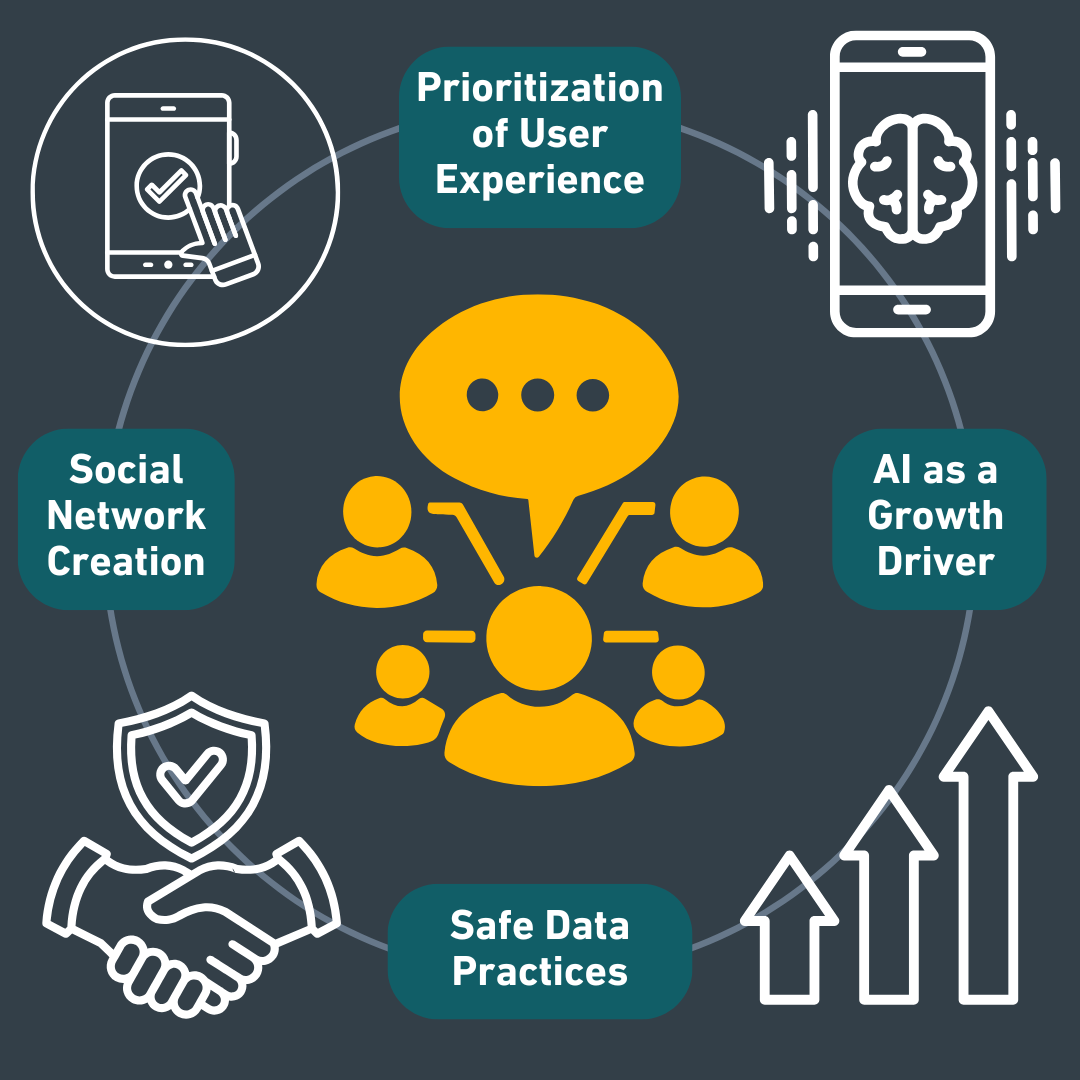
Hygge tackles adoption barriers by prioritizing user-centered design. With AI and secure data practices, Hygge’s P2P platform makes solar trading effortless and intuitive. Here’s how.
AI to Increase Usability
Hygge’s AI simplifies participation by automating bidding using market trends, energy use, and weather forecasts. Through the AI-powered chatbot Lumi, users can place bids with simple commands or let the AI act according to their preferences. The platform handles verification, login, and bid execution in the background, so even users new to energy markets can participate confidently.
As battery-as-a-service and time-of-day pricing are integrated, Hygge’s AI can autonomously buy, sell, charge, or discharge energy based on price signals, reducing manual effort even further.
By prioritizing user experience, Hygge makes participation intuitive and enjoyable, encouraging ongoing engagement.
Social Network for Rooftop Solar Users Driven by AI
When managing solar and trading is effortless, users are more likely to stay engaged and invite others to join. In a recent pilot project, we experienced the natural formation of a local solar community, where participants started friendly competitions to see who could generate and trade the most energy.
To further support community engagement, Hygge hosts participant appreciation days and awards for frequent trading or highest earnings. By removing complexity, rooftop solar becomes not just an individual activity but a shared, social experience.
Safe Data as the Foundation: Governance, Transparency, and Trust
Trust is crucial for AI adoption. To protect that trust, Hygge keeps core energy data with the utility, and only handles the necessary information for bidding. Payments are handled by partner banks, verification relies on utility smart meters, and bidding data is archived under strict governance. To further protect privacy and maintain trust, the platform uses blockchain to safeguard sensitive information.
Finally, built-in safeguards keep AI safe. The system stays within set price limits to prevent extreme bids, tracks performance with a matching score, and is overseen by humans, all while maximizing financial gain for users.
Why This Matters for Solar Adoption
Hygge’s AI-integrated platform makes solar use:
Invisible: it works in the background without demanding constant attention.
Convenient: it manages bids, storage, and energy flows on behalf of users.
Intuitive: participation becomes a natural part of everyday routines.
By prioritizing user experience with community engagement, Hygge aims to increase rooftop solar penetration from 10% to 50%, fostering exponential adoption and sustainable growth of rooftop solar. The future of solar isn’t just technology, it’s technology designed around people.
Sources
Ghimire, J., Plange-Rhule, D., & Smith, E. (2026). Perception and challenges of solar energy adoption in the United States: A systematic review for future directions. Sustainability, 18(1), 227. https://doi.org/10.3390/su18010227
Pakravan, M. H., & MacCarty, N. (2020). What motivates behavior change? Analyzing user intentions to adopt clean technologies in low-resource settings using the theory of planned behavior. Energies, 13(11), 3021. https://doi.org/10.3390/en13113021
Wilkins, D. J., Chitchyan, R., & Levine, M. (2020). Peer-to-peer energy markets: Understanding the values of collective and community trading. In Proceedings of the 2020 CHI Conference on Human Factors in Computing Systems (CHI ’20) (pp. 1–14). Association for Computing Machinery. https://doi.org/10.1145/3313831.3376135
